The silent killer of poker careers is rarely bad luck, downswings, or tough lineups.
The real killer is Cognitive Burnout.
Many talented cash game players treat their grind like an endurance race. They force eight-hour marathon sessions, skip days off, analyze hands late into the night, and measure their productivity purely by volume played.
In traditional labor, working twice as many hours yields twice as much output. In high-stakes online poker, forcing hours when your brain is depleted yields negative EV.
When your cognitive energy drops by just 20%, your decision-making degrades from sharp, solver-backed execution to lazy, impulse-driven default play. You stop tracking opponent timing tells, you miss subtle board texture changes, and you give back days of hard-earned win rate in a single exhausted session.
To build a career that lasts decades rather than months, you must manage your Energy, not just your time.
Energy Management vs. Time Management
Poker is an intense mental sport that taxes working memory, emotional control, and spatial pattern recognition.
When you sit down at a 6-max table, your brain consumes significant metabolic resources maintaining focus across multiple tables. Your cognitive capacity functions like a battery:
- 100% Battery (A-Game): High pattern recognition, calm emotional processing, sharp range construction, and disciplined folding.
- 70% Battery (B-Game): Slight impatience, defaulting to standard lines to save mental effort, missing subtle exploitative adjustments.
- 40% Battery (C-Game): Impulsive clicking, frustration tilt, calling river bets out of curiosity, and burning EV.
The moment you push past your cognitive battery limit, every additional hand you play hurts your overall win rate. An exhausted player putting in 10,000 low-quality hands will make significantly less money than a well-rested player putting in 4,000 high-focus hands.
The 3 Pillars of Sustainable Poker Work Habits
To protect your brain and maintain peak win rates without burning out, implement these three operational pillars:
1. The 90-Minute Session Cap
Human focus naturally degrades after 90 minutes of continuous high-level cognitive effort. Implement a strict 90-Minute Maximum Session Length:
- Play for 60 to 90 minutes max.
- Take a mandatory 15-minute complete break away from screens (walk, stretch, hydrate).
- Evaluate your energy: if your battery is high, start a second block. If exhausted, close the tables for the day.
2. Separating High-Focus Play from High-Focus Study
Never stack intense solver study sessions directly before a live grinding session. Studying deep tree mechanics exhausts your working memory before you even deal your first hand.
Structure your day so that deep study and live play happen in distinct, non-competing blocks or on alternate days.
3. Table Selection as Energy Conservation
Playing five tough, reg-heavy tables requires triple the cognitive effort of playing three soft, recreational-heavy tables.
Proper table selection is not just a financial tool - it is an energy management tool. The easier the decisions are at your tables, the less cognitive stamina you burn per hour.
📥 Elevate Your 6-Max Cash Game Strategy
Enjoying this chapter breakdown? Join 1,000+ cash game players receiving weekly postflop solver analyses, exploitative heuristics, and mental performance protocols directly in their inbox.
Recognizing the Early Warning Signs of Burnout
Burnout does not happen overnight; it accumulates slowly over weeks of overwork. Watch for these three early warning signs:
- Sloppy Preflop Disciplines: You start playing marginal offsuit hands from early position simply because you are bored waiting for premium holdings.
- Apathy Toward Lost Pots: When you lose a stack, you feel zero analytical interest and instead think: "Whatever, I don't care anymore."
- Dreading the Grind: You feel a heavy sense of resistance or anxiety when opening your poker client at the start of the day.
If you recognize two or more of these symptoms, taking a mandatory 48-to-72-hour complete break from poker is far more profitable than trying to power through.
The Actionable Shift: The "Hard Shutdown" Protocol
To prevent work stress from leaking into your personal life, create a strict End-of-Day Hard Shutdown Protocol:
- Close All Poker Software: Shut down your tracking software, solver tools, and poker client completely.
- Log Your Metrics: Record your session time and decision quality tags in your study journal.
- Execute a Physical Transition: Step away from your desk, change your clothes, or go for a 10-minute walk outside.
By creating a clear boundary between poker execution and your rest time, you allow your cognitive battery to fully recharge for the next day. You stop being an exhausted volume-grinder and become an elite mental athlete operating at peak EV.
Ready to Turn Strategy into EV at the Tables?
Building sustainable habits ensures you stay sharp, healthy, and profitable over the long haul. Combining long-term sustainability with a ruthless, solver-backed technical strategy is how you dominate 6-max cash games year after year.
If you are ready to stop guessing postflop, master simplified GTO heuristics, and crush real-world opponents, step into the full Cash Game Hero Blueprint 2.0.
- 40+ Hours of Step-by-Step Video Modules
- Custom Solver Ranges & Exploit HUD 2.0 Setup
- Comprehensive Mental Game Protocols & Live Hand Analysis
About the Author
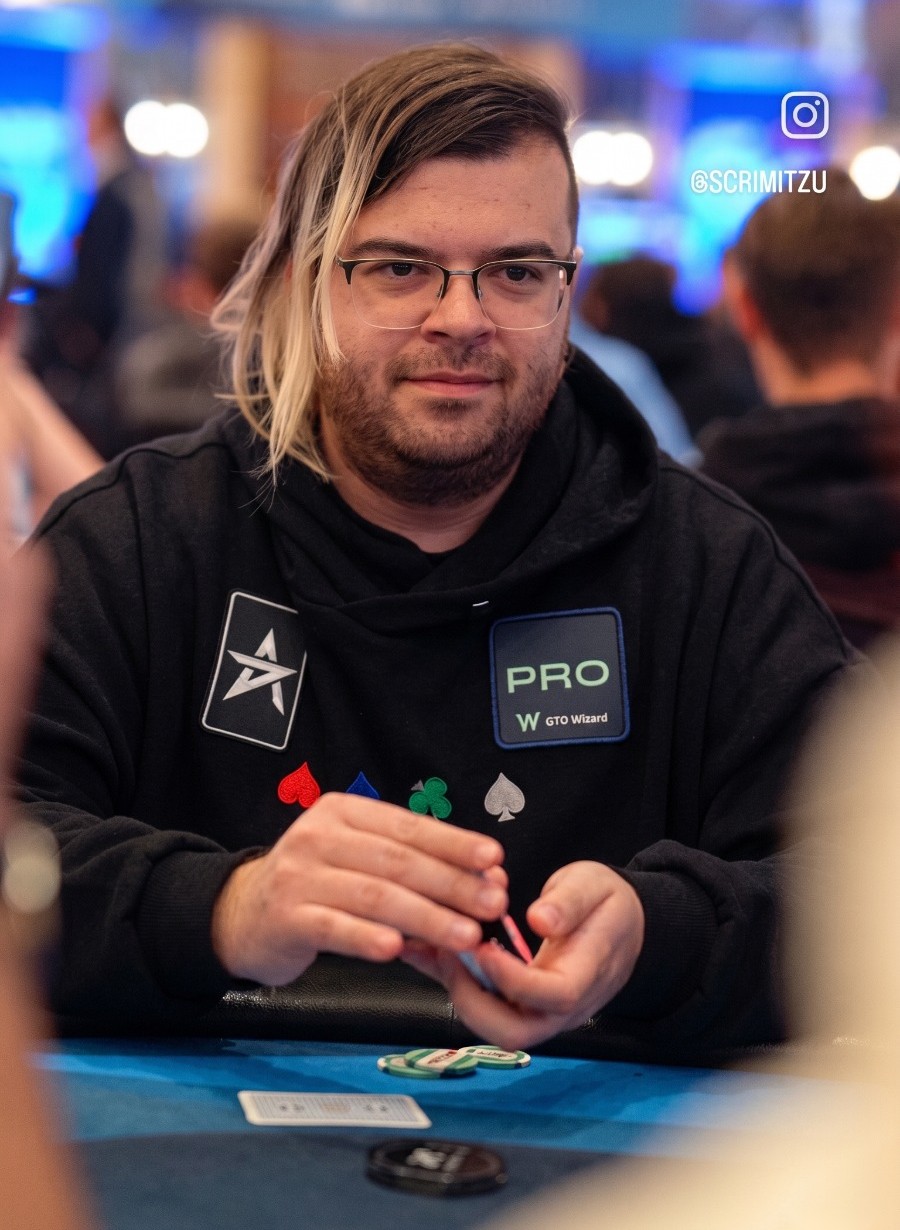
Scrimitzu is a professional poker player and coach with 17 years of experience and more than 10 million online hands played. He has coached over 500 players worldwide and is an official GTO Wizard coach and ACR Poker Team Online member.