Most poker players start their day in a state of complete reactivity.
They roll out of bed, grab a cup of coffee, open their laptop, and immediately boot up six tables of 6-max cash. Within three minutes of waking up, they are forced to make complex, multi-street solver decisions in 3-bet pots while their brain is still in a state of sleep inertia.
This reactive approach is a disaster for your win rate.
Professional poker is not a casual video game; it is an intense cognitive sport. Making high-EV decisions under pressure requires peak working memory, fast pattern recognition, and precise emotional regulation.
If you treat your day like an amateur, you will play like an amateur. To execute your strategic edge consistently, you must replace chaotic habits with a standardized Daily Execution Protocol.
Aligning Energy with Table Performance
Your brain does not operate at 100% capacity for sixteen consecutive hours. Throughout the day, your cognitive focus naturally cycles through peaks and troughs based on your circadian rhythm and metabolic energy.
Amateurs schedule their playing time around convenience or emotional urges:
- They play when they are bored.
- They play late into the night to chase session losses.
- They grind while hungry, distracted, or multi-tasking.
Professionals schedule their play around Peak Focus Windows.
By identifying the specific hours of the day when your mental sharpness is highest, you reserve those prime hours strictly for high-stakes table execution. Lower-energy windows are allocated to passive administrative tasks, light database maintenance, or physical recovery.
The 15-Minute Pre-Session Warmup Protocol
You would never sprint a 100-meter dash without stretching first. Similarly, sitting down at high-stakes cash tables without priming your brain leads to sloppy early-session misclicks and lazy default play.
Before opening a single table, execute this non-negotiable 15-minute warmup sequence:
1. Physical & Mental Clearing (5 Minutes)
Step away from all social media, news, and messaging apps. Drink a glass of water, do light physical movement, and clear your working memory of non-poker stress.
2. Strategic Priming (5 Minutes)
Review your current study notes or read your Pre-Session Prime Script. Re-anchor your brain on your core postflop heuristics (e.g., range advantages, equity realization parameters, target-range sizing rules).
3. Lobby & Environment Prep (5 Minutes)
Boot up your tracking software, HUD overlays, and table graphics. Open the lobby and evaluate active tables for soft recreational players before taking a seat.
📥 Elevate Your 6-Max Cash Game Strategy
Enjoying this chapter breakdown? Join 1,000+ cash game players receiving weekly postflop solver analyses, exploitative heuristics, and mental performance protocols directly in their inbox.
Reactive Grinding vs. Systematic Execution
The Reactive Amateur Routine
- Wake-Up Routine: Boots up tables immediately with zero mental preparation.
- Session Structure: Plays unpredictable marathon sessions (3 to 6+ hours) until tilted or tired.
- Focus Management: Multi-tasks with phones, social media, or videos during hands.
- Session Ending: Quits impulsively based on short-term win/loss emotions.
The Systematic Professional Protocol
- Wake-Up Routine: Follows a structured warmup to prime focus and strategy before playing.
- Session Structure: Operates in strict 60-to-90-minute focus blocks separated by mandatory breaks.
- Focus Management: Dedicated single-task execution with zero off-table distractions.
- Session Ending: Quits strictly by schedule or when cognitive battery drops below A-game threshold.
The 3-Block Daily Operating Structure
To maximize both table volume and study retention without causing burnout, structure your work day into three distinct operating blocks:
- Block 1: Deep Play (90 Minutes): Your highest-energy window reserved strictly for live table execution. Complete focus, zero phone distractions, executing baseline heuristics.
- Block 2: Active Recovery (30–60 Minutes): Complete disconnection from screens. Walk outside, eat a high-protein meal, hydrate, and let your cognitive battery recharge.
- Block 3: Secondary Play or Study (60–90 Minutes): Depending on your energy levels, run a second targeted play block on soft tables or execute a focused solver study session.
The Actionable Shift: The "First 10 Hands" Rule
During your next session, implement the First 10 Hands Rule:
For the first ten hands dealt at every table you open, fold all marginal borderline hands that you would normally play as low-EV opens or floats.
Use those first ten hands purely to observe the table flow, identify the recreational players, observe timing tells, and verify that your focus is 100% engaged before stepping into high-variance, multi-street pots.
By easing smoothly into the session, you eliminate early-session anxiety and set a calm, disciplined tone for the rest of your play block.
Ready to Turn Strategy into EV at the Tables?
Structuring your day for peak cognitive output guarantees that you bring your best strategic self to every hand you play. Combining high-performance daily habits with a dominant, solver-backed framework is how you conquer 6-max cash games.
If you are ready to stop guessing postflop, master simplified GTO heuristics, and crush real-world opponents, step into the full Cash Game Hero Blueprint 2.0.
- 40+ Hours of Step-by-Step Video Modules
- Custom Solver Ranges & Exploit HUD 2.0 Setup
- Comprehensive Mental Game Protocols & Live Hand Analysis
About the Author
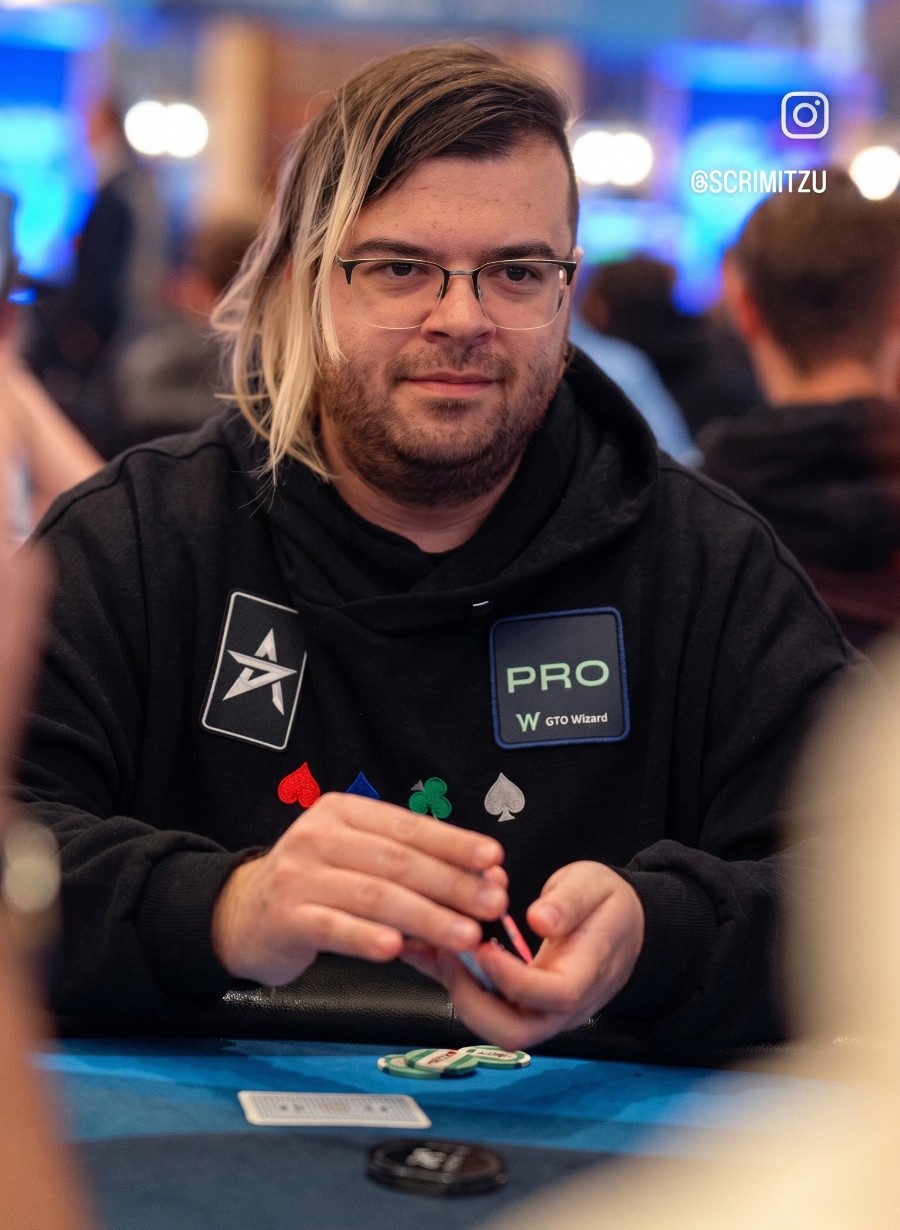
Scrimitzu is a professional poker player and coach with 17 years of experience and more than 10 million online hands played. He has coached over 500 players worldwide and is an official GTO Wizard coach and ACR Poker Team Online member.