When you reach 500NL, 1000NL, and beyond, the fundamental structure of your daily games shifts.
At micro and mid-stakes, the player pool is vast. You face hundreds of unique opponents, allowing you to rely heavily on broad population exploits and standardized default playbooks.
At high stakes, the player pool shrinks dramatically.
You find yourself sitting with the same pool of 15 to 20 regulars hundreds of hours every year. Everyone owns thousands of hands of tracking data on everyone else, everyone uses solvers, and everyone understands basic theoretical range construction.
In this environment, static play is fatal. If your default strategy remains rigid, the pool will rapidly identify your structural frequencies, node-lock your leaks, and extract your win rate.
To crush small, tough high-stakes pools, you must master the Metagame - the dynamic game about the game.
Navigating the Small-Pool Ecosystem
In a small pool, every single hand you play is a broadcast of information to your opponents.
If you fold to three consecutive turn check-raises, the regulars take note. If you show down an unorthodox 150% pot river bluff on a paired board, that hand history gets saved, shared, and analyzed in private study groups before your next morning session.
Navigating this ecosystem requires shifting from passive default play to Dynamic Image Management:
1. Exploiting Opponent Presumptions
High-stakes regulars make assumptions based on your recent public hand histories. If you recently showed down two cold-bluffs in high-variance spots, the pool will temporarily perceive you as overly aggressive. You exploit this perception by shifting your near-term frequencies toward value betting thinner and reducing marginal bluffs.
2. Avoiding Ego-Driven "Leveling Loops"
A "leveling loop" occurs when players make low-EV plays based on multi-layered assumptions: "He knows that I know that he knows I'm bluffing, so I'm going to triple-barrel bluff into his protected range."
Elite crushers avoid speculative leveling wars. They keep their adjustments strictly grounded in mathematical solver node-locks and verifiable database statistics, not subjective ego battles.
Combating Extreme Preflop Aggression
The most noticeable technical characteristic of high-stakes 6-max cash games is relentless preflop aggression.
High-stakes regulars do not allow open-raisers to see cheap flops. Overall 3-bet frequencies routinely climb past 12%, 4-bet bluffing ranges expand, and squeezes out of the blinds are executed with surgical precision.
To survive and profit under this level of pressure, implement these structural adjustments:
- Sharpen Open-Raising Ranges: Wide, weak opening ranges from the Cutoff and Button get ruthlessly punished by aggressive 3-bettors in the Blinds. Tighten your opening boundaries slightly to ensure your ranges can comfortably defend against high 3-bet frequencies.
- Construct Balanced 4-Bet Bluffing Ranges: If you only 4-bet premium pairs (QQ+, AK), aggressive regulars will 3-bet fold you to death. Incorporate structural 4-bet bluffs with key blocker holdings - such as A5s, A4s, and KQs - that reduce the probability of your opponent holding premium hands.
- Expand Position-Based Flatting Ranges: Against small 3-bets from the Blinds when you hold position on the Button, flatting with high-playability hands (suited connectors, broadways) allows you to realize equity postflop where your positional advantage crushes their out-of-position range.
📥 Elevate Your 6-Max Cash Game Strategy
Enjoying this chapter breakdown? Join 1,000+ cash game players receiving weekly postflop solver analyses, exploitative heuristics, and mental performance protocols directly in their inbox.
The 3 High-Stakes Metagame Adjustments
To maintain an offensive edge in small, aggressive pools, incorporate these three strategic adaptations into your weekly routine:
1. Targeted Individual Reg Profiles
Stop relying on broad pool statistics. Maintain specific, detailed player profiles for the top 10 regulars in your pool. Track individual quirks:
- Reg A folds 65% to river overbets in single-raised pots.
- Reg B under-defends their Big Blind against Button opens when multi-tabling.
- Reg C never check-raises turn cards without two pair or better.
2. Asymmetric Sizing Tells
Because high-stakes regulars pay close attention to sizing choices, vary your sizing geometry dynamically based on board texture and range composition rather than hand strength. Keep your sizing rules strictly tied to your range, making it impossible for sharp opponents to read your holding.
3. Exploiting "Over-GTO" Dogmatism
Many high-stakes regulars fall into the trap of executing GTO solver outputs mechanically without considering real-world opponents. When a dogmatic reg executes a balanced, multi-frequency line against a recreational player who never folds, exploit their mistake by taking simpler, hyper-linearly value-heavy lines that print pure EV.
The Actionable Shift: The "Top 10 Reg Audit"
Before taking your seat in your next high-stakes session, complete this 10-minute audit:
- Open your database and list the top 10 regulars who played the most hands against you over the last 90 days.
- Identify one specific structural leak for each player (e.g., high fold to 3-bet, low turn probe frequency, or wide c-bet fold).
- Write down a clear, single-sentence counter-exploit next to each name on your desk note.
When you enter the lobby with pre-planned, individual counter-strategies against every regular at the table, you strip away their data advantage and take total control of the metagame.
Ready to Turn Strategy into EV at the Tables?
Mastering metagame dynamics and high-frequency aggression allows you to dominate small pools and extract maximum profit at the highest stakes. Combining dynamic adaptability with a dominant, solver-backed framework is how you achieve sustainable high-stakes mastery.
If you are ready to stop guessing postflop, master simplified GTO heuristics, and crush real-world opponents, step into the full Cash Game Hero Blueprint 2.0.
- 40+ Hours of Step-by-Step Video Modules
- Custom Solver Ranges & Exploit HUD 2.0 Setup
- Comprehensive Mental Game Protocols & Live Hand Analysis
About the Author
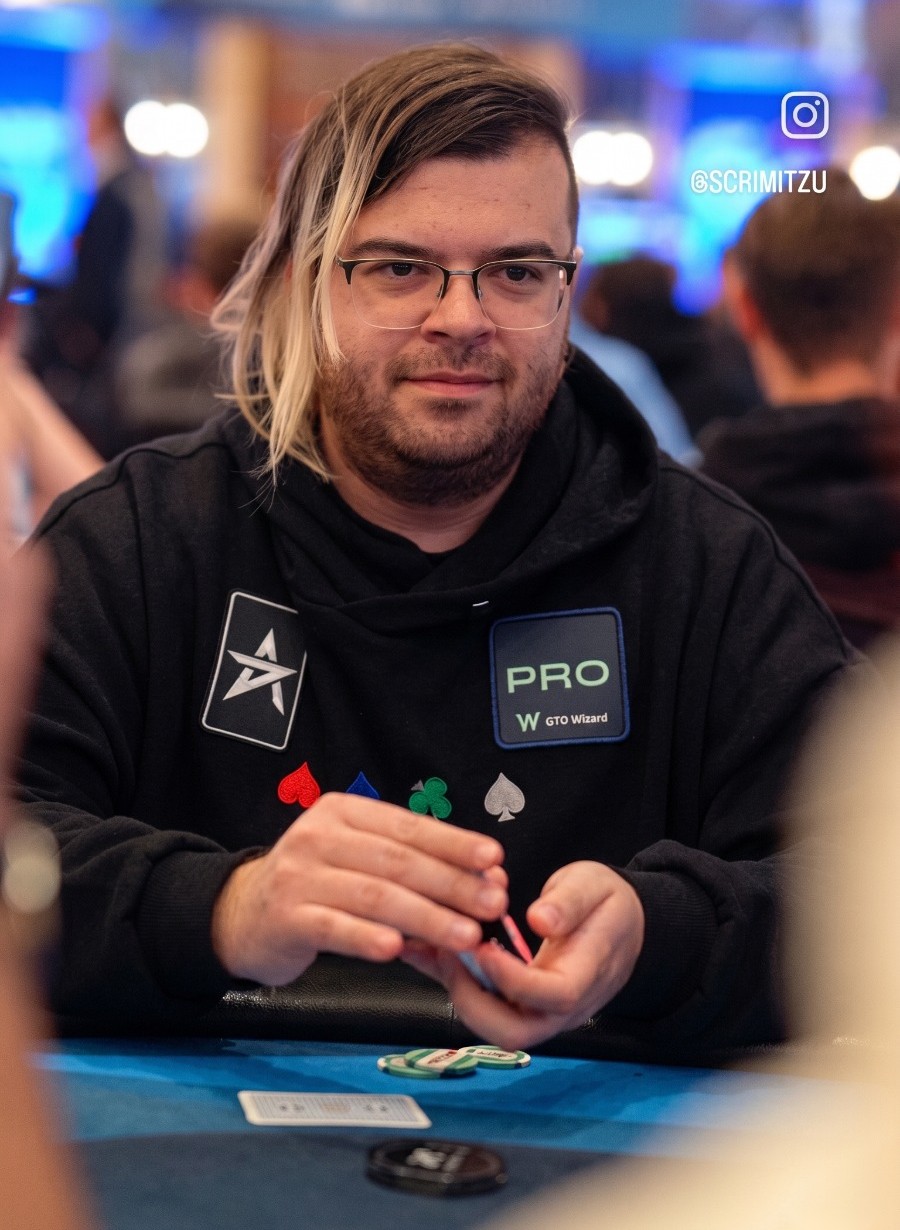
Scrimitzu is a professional poker player and coach with 17 years of experience and more than 10 million online hands played. He has coached over 500 players worldwide and is an official GTO Wizard coach and ACR Poker Team Online member.