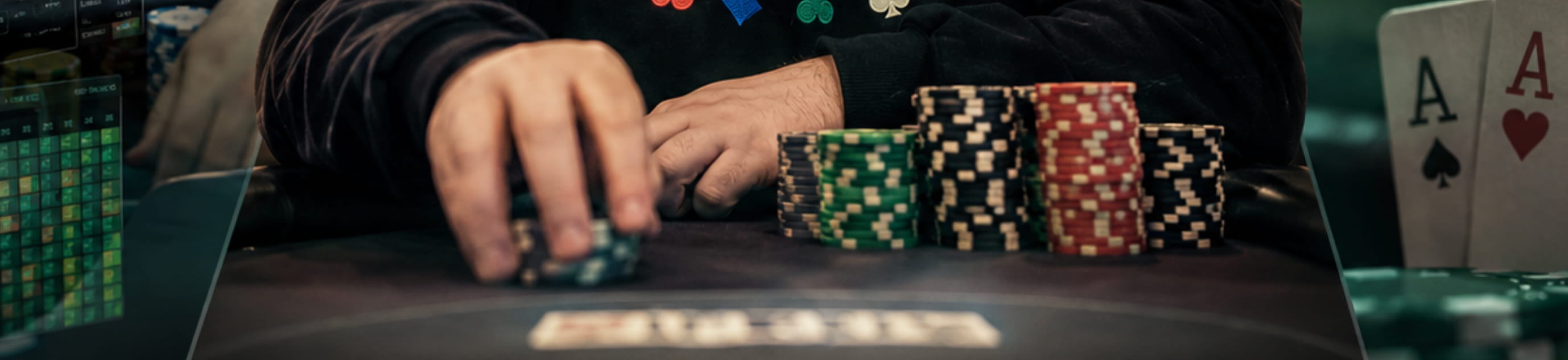
Most poker players study as inefficiently as they play.
They buy access to a video training site, sit back with a drink, and passively watch a high-stakes crusher review hands for an hour. Or they open a solver, run a random hand, look at a complex matrix of green, red, and blue boxes, and assume they are absorbing GTO wisdom.
This is Passive Consumption, not active study.
Passive study creates the illusion of productivity while yielding almost zero retention. When you get into a high-pressure 3-bet pot on the turn three days later, that video you passively watched won't help you construct a balanced range under time pressure.
To build an edge that outpaces the field, you need a structured Active Study System - a repeatable loop that converts off-table analysis into permanent on-table heuristics.
The 3 Pillars of High-Yield Off-Table Study
An elite study routine relies on three interconnected pillars that reinforce each other:
1. Active Solver Work (Hypothesis Testing)
Instead of running a solver to see what the machine does, start with a hypothesis.
Before clicking "Solve" or looking at the solution matrix, write down your predicted betting frequencies, primary bluff candidates, and check-raising ranges. When the solver output generates, compare your predictions against the baseline.
Focus entirely on the "Why": Why is the solver checking this hand? Is it because of blocker effects, range advantage, or future street connectivity?
2. Database Auditing (Leak Identification)
Use database tracking tools (Hand2Note, PokerTracker, Holdem Manager) to locate where your actual execution deviates from theoretical target ranges.
Filter for specific structural nodes - such as turn check-calling frequencies, 3-bet pot c-betting, or river fold-to-raise stats - and identify systemic trends in your play across 20,000+ hand samples.
3. Study Masterminds & Peer Feedback
Studying in isolation creates blind spots. Joining a high-level mastermind group or study partnership with 2–4 motivated peers provides essential objective feedback.
When you explain your strategic reasoning out loud to a peer, logical flaws in your heuristics become instantly apparent.
The 80/20 Study-to-Play Ratio
How much time should you spend studying versus playing?
A common mistake among ambitious regulars is over-studying - spending 50% of their allocated poker time in solvers and 50% playing.
Without sufficient hand volume, off-table concepts never get tested in real-world environments. Conversely, playing 100% volume with zero study leads to strategic stagnation.
The Ideal Ratio Framework:
- Active Grinding (75%–80% of total time): Executing heuristics, gathering hand history data, and building volume.
- Structured Study (20%–25% of total time): Targeted solver reviews, mastermind sessions, and database audits.
For a player allocating 30 hours per week to poker, this translates to roughly 22–24 hours of live table play and 6–8 hours of deep, structured study.
📥 Elevate Your 6-Max Cash Game Strategy
Enjoying this chapter breakdown? Join 1,000+ cash game players receiving weekly postflop solver analyses, exploitative heuristics, and mental performance protocols directly in their inbox.
Structuring Your Weekly Study Agenda
To prevent study time from feeling chaotic, assign a dedicated focus to each study session throughout your week:
- Session 1: Database Node Audit (60 Mins): Filter your database for one specific leak node (e.g., Single Raised Pots OOP as PFR) and tag 5 execution errors.
- Session 2: Solver Deep-Dive (90 Mins): Take those 5 tagged hands into your solver. Run node locks, analyze range interactions, and derive 2 simplified heuristics.
- Session 3: Mastermind Review (90 Mins): Present your findings and tricky hands to your study group for critique and debate.
- Session 4: Heuristic Integration (30 Mins): Write down your updated postflop rules on your cheat-sheet notes before your next live playing block.
The Actionable Shift: The "One-Heuristic Rule"
Never leave a study session with a vague goal like "I need to play better in 3-bet pots."
At the end of every study session, distill your analysis into One Actionable Heuristic that you can apply immediately in your next session.
Example: "On wet turn cards in single-raised pots as the in-position caller, fold marginal gutshots without backdoor flush draws when facing a 75% pot barrel."
When you turn study hours into clear, actionable rules, your technical understanding compounds continuously. You cease to be a passive consumer of content and become the architect of your own market-crushing win rate.
Ready to Turn Strategy into EV at the Tables?
Building a high-yield study system ensures your technical game evolves faster than the competition. Combining structured study habits with a dominant, solver-backed framework is how you conquer 6-max cash games for the long run.
If you are ready to stop guessing postflop, master simplified GTO heuristics, and crush real-world opponents, step into the full Cash Game Hero Blueprint 2.0.
- 40+ Hours of Step-by-Step Video Modules
- Custom Solver Ranges & Exploit HUD 2.0 Setup
- Comprehensive Mental Game Protocols & Live Hand Analysis

About the Author
Scrimitzu is a professional poker player and coach with 17 years of experience and more than 10 million online hands played. He has coached over 500 players worldwide and is an official GTO Wizard coach and ACR Poker Team Online member.