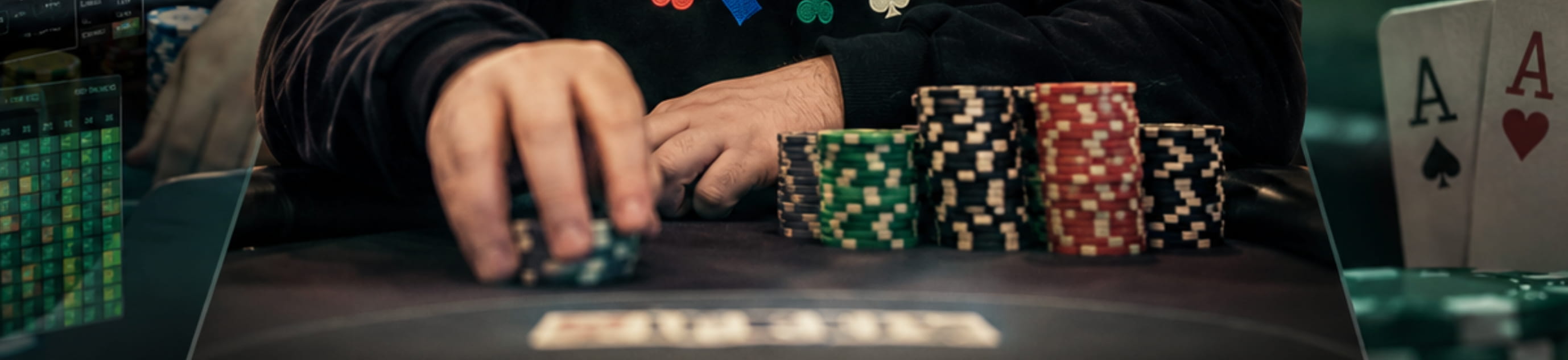
Taking your first shot at a higher stake is one of the most exciting milestones in a poker player's career. It signals growth, technical progress, and expanding bankroll capital.
It is also where many talented mid-stakes crushers completely freeze up.
When you step up from 100NL to 200NL, or from 500NL to 1000NL, the game changes on two distinct fronts simultaneously: Psychological Pressure and Technical Aggression.
Suddenly, losing a single stack represents a dollar amount that used to equal three buy-ins at your previous stake. At the same time, the regulars in the lobby react faster, 3-bet more relentlessly, and punish small postflop mistakes far more severely than the field you just left behind.
If you treat moving up stakes as merely "the same game with bigger numbers," you will play scared, make timid adjustments, and get pushed out of the lobby.
Ascending to high-stakes requires a deliberate protocol for conquering both the psychological shock and the technical jump.
The Psychological Trap: Dollar Anchoring
The single biggest psychological hurdle when moving up stakes is Dollar Anchoring.
At your baseline stake, you built emotional numbness to win/loss amounts. Losing a $100 stack felt routine and statistically neutral.
When you move up to a $400 or $1,000 buy-in stake, your brain naturally re-attaches real-world monetary value to those chips. You start converting every pot into rent payments, grocery bills, or high-end electronics.
Dollar anchoring triggers two catastrophic playing flaws:
1. Money-Scared Passive Play
When a $600 pot is on the line on the river, you fold a high-EV bluff-catcher because you can't stomach the thought of losing $600 in five seconds. You check back thin value bets to "save money," giving away significant win rate.
2. Over-Respecting Higher-Stakes Opponents
You assume that because the stakes are higher, every player at the table is an infallible wizard. You start folding to their bluffs at an unsustainable frequency, giving them free reign to steal pots without resistance.
The Technical Reality Shift: What Actually Changes
The physical rules of 6-max cash games remain identical regardless of stakes. However, the strategic environment undergoes three distinct shifts as you climb:
1. Relentless Preflop Aggression
In lower-stakes games, players cold-call open raises frequently, leading to multiway pots. At higher stakes, cold-calling drops significantly. Players use aggressive 3-betting and 4-betting strategies to isolate opponents and claim dead money preflop.
2. Capped Ranges Are Punished Immediately
Lower-stakes opponents often fail to recognize when your line caps your range to medium-strength holdings. Higher-stakes regulars identify capped nodes instantly and deploy geometric overbets to put maximum pressure on your bluff-catchers.
3. Lower Frequency of Blatant Errors
You will rarely see opponents limp, play 40% VPIP, or pay off three streets of value with weak bottom pairs. You must transition from relying on passive "rec-hunting" to executing sharp, systemic GTO baselines paired with targeted regular exploits.
📥 Elevate Your 6-Max Cash Game Strategy
Enjoying this chapter breakdown? Join 1,000+ cash game players receiving weekly postflop solver analyses, exploitative heuristics, and mental performance protocols directly in their inbox.
The Shot-Taking Protocol: Desensitizing the Jump
To successfully transition to a higher stake without blowing up your bankroll, execute this structured shot-taking framework:
- Step 1: Set a Strict 4-to-5 Buy-In Stop-Loss: Allocate exactly 4 or 5 buy-ins from your bankroll strictly for the shot. If you lose those buy-ins, move down immediately to your base stake without hesitation or emotional guilt.
- Step 2: Table Selection Over Lobby Pride: Do not jump straight into a table packed with five top regulars just to prove yourself. Wait for a high-stake table that includes at least one weak or recreational player to guarantee positive table EV.
- Step 3: Convert All Client Displays to Big Blinds (BBs): Turn off dollar/currency displays in your poker client. When your screen shows "100 BB" instead of "$1,000," your brain focuses purely on geometric range execution rather than monetary fear.
The Actionable Shift: The "Unmasking" Exercise
Before taking your next shot at a higher stake, open your database or HUD software and analyze 50 hand histories from the top regulars at that higher stake.
You will quickly discover something comforting: They are human beings who make errors.
You will see them make improper river bluff-catches, misread board textures, and execute flawed sizing choices. Demystifying higher-stakes regulars eliminates imposter syndrome and gives you the logical confidence required to execute your A-game in tougher lineups.
Ready to Turn Strategy into EV at the Tables?
Navigating the jump to higher stakes expands your earning ceiling and unlocks serious bankroll growth. Combining psychological desensitization with a dominant, solver-backed technical framework is how you climb the ladder permanently.
If you are ready to stop guessing postflop, master simplified GTO heuristics, and crush real-world opponents, step into the full Cash Game Hero Blueprint 2.0.
- 40+ Hours of Step-by-Step Video Modules
- Custom Solver Ranges & Exploit HUD 2.0 Setup
- Comprehensive Mental Game Protocols & Live Hand Analysis

About the Author
Scrimitzu is a professional poker player and coach with 17 years of experience and more than 10 million online hands played. He has coached over 500 players worldwide and is an official GTO Wizard coach and ACR Poker Team Online member.