The biggest ceiling for a poker player is rarely technical; it is the story they tell themselves about who they are.
Most players view poker strictly as a card game where they must make the best mathematical decisions. That is only partially true. High-stakes poker is actually a game of identity validation. The cards are simply the medium through which you prove your worth to yourself and the world.
If that worth is fragile - anchored solely to winning session graphs, being "smart," or feeling superior to your opponents - the inevitable variance of the game will shatter it.
To climb the stakes, you have to rebuild your mental foundation. That starts with replacing weak identities ("The Grinder," "The Victim," "The Talented Kid") with an operating system built for elite, long-term performance.
The "Result-First" Delusion
The single most common mistake aspiring professionals make is getting the order of operations backward.
Most players operate on a Result-First mindset. Their internal dialogue sounds like this:
- "Once I beat 500NL, then I will feel like a real professional."
- "Once I have $50,000 in my bankroll, then I’ll start taking my sleep, diet, and warm-ups seriously."
They are waiting for external results to give them permission to be great. They treat confidence like a prize handed out at the finish line.
That logic is completely inverted.
Results are a lagging indicator of your habits, and your habits are a lagging indicator of your identity. You cannot wait for the trophy to decide you are a champion. You must adopt the identity of a world-class professional before you have the bankroll to prove it.
This is The "Michael Jordan" Identity.
Michael Jordan did not practice with obsessive intensity because he had already won championships. He won championships because, long before the rings, he identified as someone who operated at a standard higher than everyone else. The identity dictated the work, and the work produced the results.
The "Grinder" vs. The "World-Class Athlete"
To see why identity controls win rate, look at how two different mindsets handle the exact same downswing:
Player A: The "Grinder"
To Player A, poker is a hustle. They roll out of bed, sit at their desk in pajamas, and immediately open up their tables.
When they lose three buy-ins on a Tuesday afternoon, their entire identity is threatened. They think: "Maybe I’m not good. Maybe the site is rigged. Maybe I should quit." Because they view themselves as a struggler, they actively search for evidence that the struggle is real. When they win, they feel relief rather than genuine confidence.
Player B: The "World-Class Athlete"
Player B plays the exact same stakes as Player A and might even have a smaller bankroll. But Player B has decided: "I am the Michael Jordan of this limit."
Because of that identity, Player B’s behavior is non-negotiable:
- Would a world-class athlete compete on 4 hours of sleep? No. So Player B sets a strict sleep protocol.
- Would an elite athlete eat junk food mid-session? No. So Player B manages their energy.
- Would a champion whine on forums about a bad beat? No. They review the hand, find the mistake, and move on.
When Player B loses three buy-ins, their identity is unaffected. Their self-worth isn't attached to short-term variance. They executed their routine and played their strategy. The result of one session is just noise.
Key Heuristic: True confidence is not the happy dopamine rush you get from winning a pot. Confidence is Self-Trust. It is the objective knowledge that you can handle whatever variance throws at you because your preparation is rock solid.
📥 Master 6-Max Postflop Strategy
Enjoying this chapter breakdown? Join 1,000+ cash game players receiving my weekly 6-Max strategy insights, solver breakdowns, and mental game protocols directly in their inbox.
Confidence is a Choice, Not a Feeling
You do not need to be the best player in the world today to adopt an elite mindset. You simply need to make a choice.
One high-stakes crusher famously told his study group on day one: "I will be the number one player in this stable." He didn't say it out of arrogance; he said it to burn the boats. By claiming that identity publicly, he forced himself to work harder than anyone else to avoid becoming a liar.
He didn't wait to be "good" before gaining swagger. He used the identity to force himself to become good.
The Actionable Shift: The 7-Day "As If" Exercise
You can instantly shift your mental trajectory by changing how you phrase your current journey:
- Stop saying: "I’m trying to move up to 200NL."
- Start saying: "I am a high-stakes player currently grinding through the mid-stakes."
If you are "trying," you give yourself permission to quit when it gets hard. If you "are," then obstacles are simply part of the job description.
The 7-Day Exercise:
For the next seven days, operate as if a documentary crew is filming your rise to the top of the poker world for a Netflix special.
Ask yourself in every moment:
- Would the "You" in the documentary scream at the monitor over a beat?
- Would the "You" in the documentary skip study to scroll social media?
- Would the "You" in the documentary log into tables tired and unfocused?
The version of you that exists in that documentary is the identity you need to adopt right now. Do not wait for the high-stakes contract. Be the pro, do the work, and the results will follow.
Ready to Turn Mindset into EV at the Tables?
A world-class identity requires a world-class technical system to match.
If you're ready to eliminate postflop guessing, execute simplified GTO heuristics, and exploit real-pool leaks across 6-Max cash games, step into the full Cash Game Hero Blueprint 2.0.
- Over 40+ hours of structured video modules.
- Custom solver ranges & Exploit HUD 2.0 setup.
- Direct access to mental game protocols and live hand analysis.
About the Author
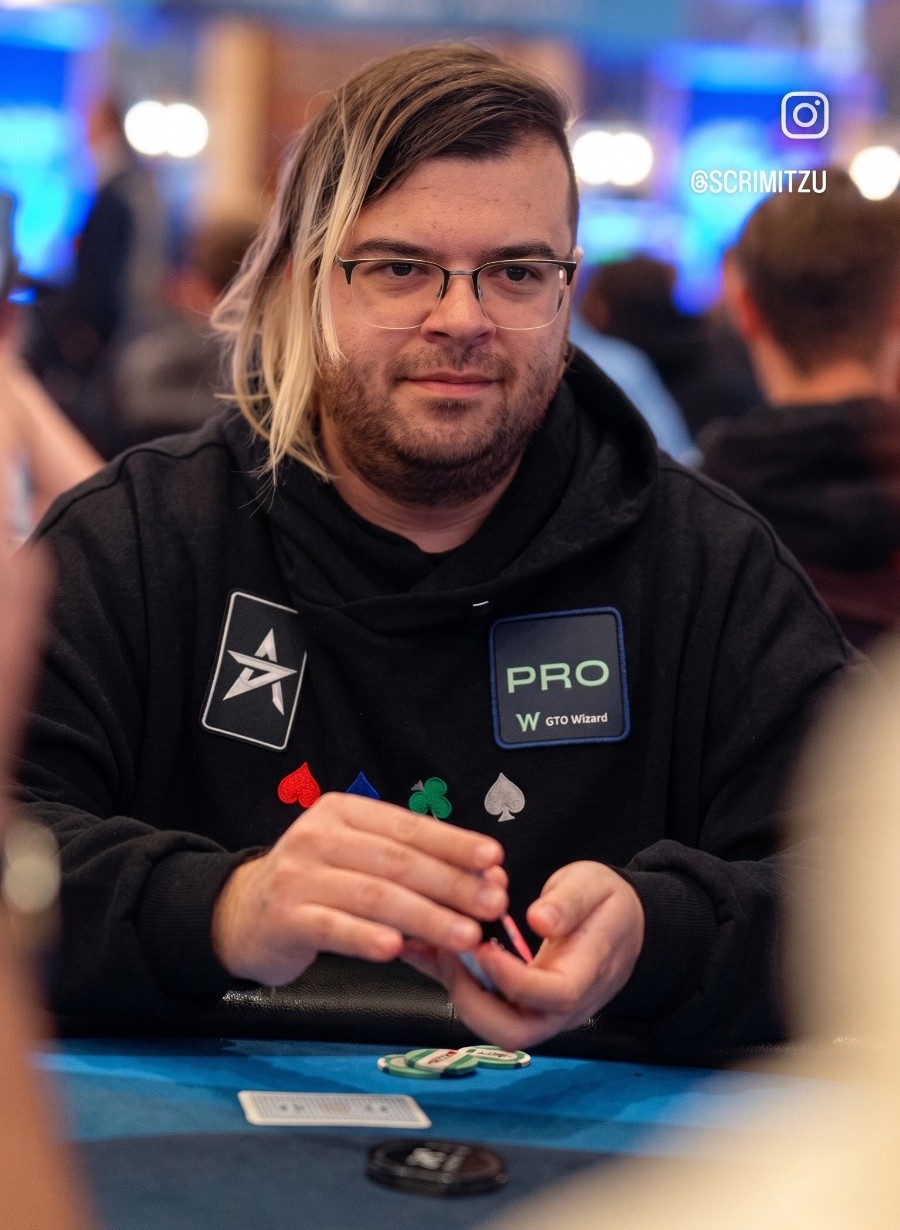
Scrimitzu is a professional poker player and coach with 17 years of experience and more than 10 million online hands played. He has coached over 500 players worldwide and is an official GTO Wizard coach and ACR Poker Team Online member.