Most mid-stakes poker players make postflop decisions based on intuition, recency bias, or partial information.
They look at their hole cards, glance at the flop, and immediately ask: "Does my hand beat his hand?"
This hand-vs-hand approach is the root cause of inconsistent win rates. It leads to guessing on the turn, making awkward bet sizes on the river, and losing stacks in spots where a solver-backed system finds an easy check or fold.
To crush modern 6-max cash games, you must replace emotional guessing with a standardized, repeatable decision pipeline. Before you make a single postflop bet, raise, or call, run the hand through this 4-Step Postflop Execution Protocol.
Step 1: Range vs. Range Construction
The foundation of every optimal postflop decision is establishing how both players' entire range of hands interacts with the board texture.
Stop trying to put your opponent on a specific holding. In 6-max cash games, your opponent's preflop actions (e.g., Single Raised Pot, 3-Bet Pot, In Position vs. Out of Position) define a broad distribution of hands.
Before choosing an action, evaluate two core metrics:
1. Range Advantage
Which player has a higher overall equity percentage across their entire range on this board? The player with the range advantage generally dictates the overall betting frequency and can c-bet a wide portion of their holdings.
2. Nut Advantage
Which player holds a higher density of super-strong hands (sets, two pairs, monster draws)? The player with the nut advantage holds the right to use geometric, large bet sizes or overbets to pressure capped ranges.
If you skip Step 1 and play strictly your two hole cards, you will constantly bet into opponents who hold massive nut advantages, leading to disastrous check-raises.
Step 2: Equity Realization Assessment
Raw equity (your percentage chance of winning at showdown) is meaningless if you cannot reach showdown or fold out better hands. You must calculate your Equity Realization (EQR).
Equity realization measures how effectively a hand can convert its raw equity into actual profit based on three factors:
- Position: Being In Position (IP) dramatically increases EQR because you get the final action on every street.
- Hand Structure: Connected, suited, and high-card holdings realize equity far better than disjointed, weak holdings.
- Opponent Aggression: Playing against an aggressive opponent reduces your EQR when Out of Position (OOP) because they will force you off marginal equity before the river.
Before floating a flop c-bet or calling a turn barrel, ask yourself: "Can this hand realize its equity smoothly over future street cards, or am I going to get forced off my equity on dynamic turns?"
📥 Elevate Your 6-Max Cash Game Strategy
Enjoying this chapter breakdown? Join 1,000+ cash game players receiving weekly postflop solver analyses, exploitative heuristics, and mental performance protocols directly in their inbox.
Step 3: Strategic Objective Selection
Never make a bet to "see where you are at" or "get information." Information bets are negative-EV plays that build pots when you are behind and fold out hands you dominate.
Every bet or raise must have one of three primary strategic objectives:
1. Pure Value
You are betting to get called by a worse hand. Your sizing should maximize the amount of money a weaker range is willing to pay.
2. Pure or Semi-Bluffing
You are betting to force a better hand or a hand with significant equity against you to fold. Semi-bluffs leverage draw equity combined with fold equity.
3. Equity Denial
You are betting a vulnerable, medium-strength hand to force your opponent to fold weak hands that still hold 15%–30% live equity against you (e.g., folding out overcards on a wet flop).
If your proposed action does not satisfy at least one of these three objectives, check.
Step 4: Sizing Execution & Commitment Check
Once you identify your strategic objective, select a bet size that targets the specific target range of your opponent while planning future street commitment.
Target-Range Sizing Heuristics:
- Small Sizes (25%–33% Pot): Used on dry, static board textures where your entire range wants to bet for equity denial or high-frequency value.
- Medium Sizes (50%–75% Pot): Used on dynamic board textures where you need to charge equity draws and build the pot with strong, polar holdings.
- Overbets (125%+ Pot): Used when you hold a distinct Nut Advantage against a capped opponent range, forcing them into tough decisions with medium-strength catchers.
The SPR Commitment Check
Always check the Stack-to-Pot Ratio (SPR) before betting. If your proposed bet size leaves you with an awkward SPR on the turn or river where you are forced to fold a strong hand or stack off with a weak one, adjust your sizing immediately on the current street.
The Protocol in Action: A Quick Scenario Walkthrough
Scenario: You open on the Button (BTN) with Ace-Jack suited, and the Big Blind (BB) calls. The flop comes King-8-3 rainbow.
- Step 1 (Range Construction): You have a massive Range Advantage and Nut Advantage (you hold all AA, KK, AK; BB capped their range by flatting preflop).
- Step 2 (Equity Realization): You are In Position with high-card connectivity and backdoors. Your EQR is extremely high.
- Step 3 (Strategic Objective): You hold two overcards with high equity. A c-bet accomplishes Equity Denial by folding out BB's random undercards and small pairs.
- Step 4 (Sizing Execution): Because this board is static and dry, you execute a small 25%–33% pot c-bet. This applies maximum range pressure while risking minimal capital.
The Actionable Shift: The 5-Second Postflop Pause
In your next session, implement a mandatory 5-Second Pause as soon as the flop, turn, or river is dealt.
Do not touch your mouse instantly. Take 5 seconds to run through the protocol sequence:
- Who owns the Range/Nut advantage?
- How well does my hand realize equity?
- What is my exact objective (Value, Bluff, or Denial)?
- What sizing targets their range best?
When you build this habit, sloppy misclicks and low-EV lines disappear completely. You begin playing systematic, solver-backed poker that forces your opponents into continuous mistakes.
Ready to Turn Strategy into EV at the Tables?
Mastering a postflop protocol is how you eliminate guesswork and build a sustainable win rate. Pairing that decision framework with a dominant, solver-backed technical blueprint is how you crush 6-max games systematically.
If you are ready to stop guessing postflop, master simplified GTO heuristics, and crush real-world opponents, step into the full Cash Game Hero Blueprint 2.0.
- 40+ Hours of Step-by-Step Video Modules
- Custom Solver Ranges & Exploit HUD 2.0 Setup
- Comprehensive Mental Game Protocols & Live Hand Analysis
About the Author
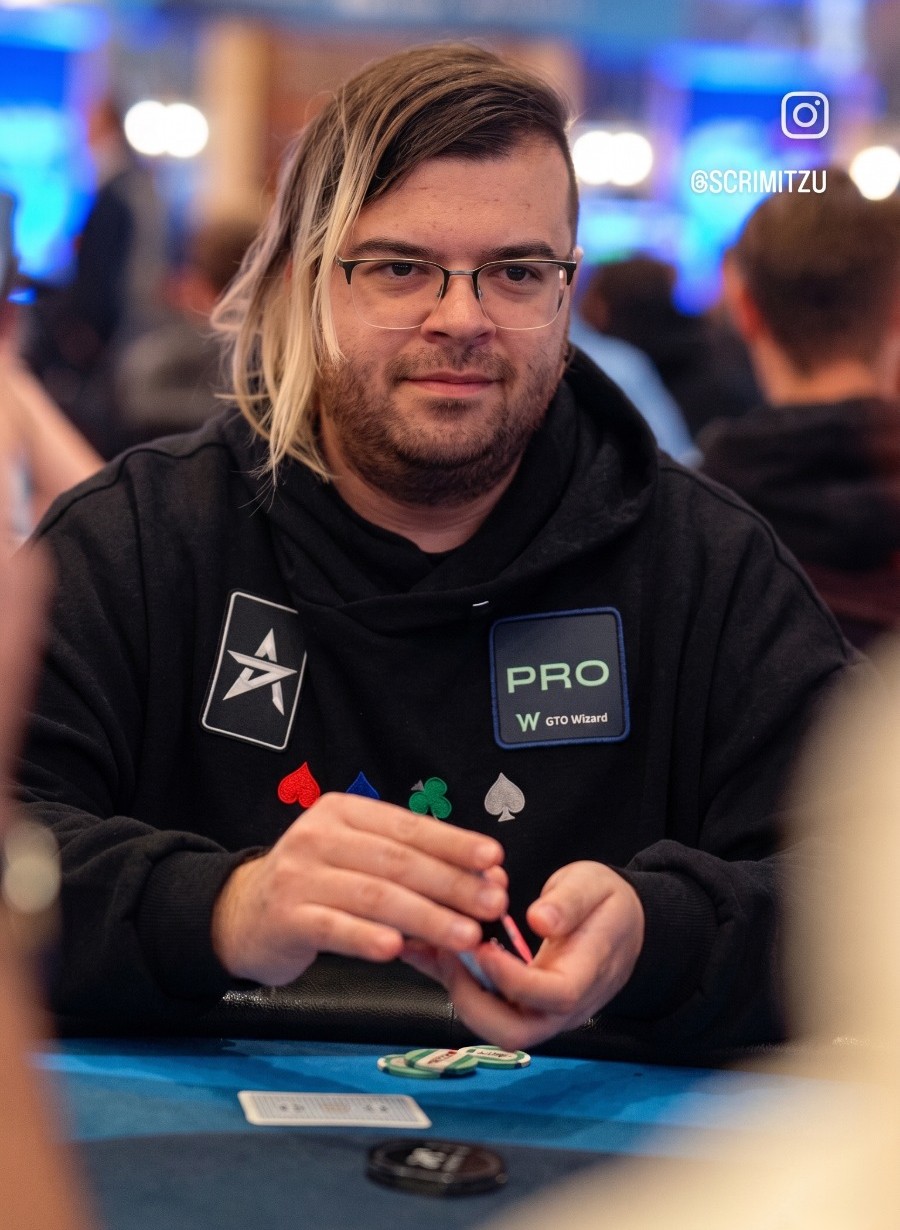
Scrimitzu is a professional poker player and coach with 17 years of experience and more than 10 million online hands played. He has coached over 500 players worldwide and is an official GTO Wizard coach and ACR Poker Team Online member.