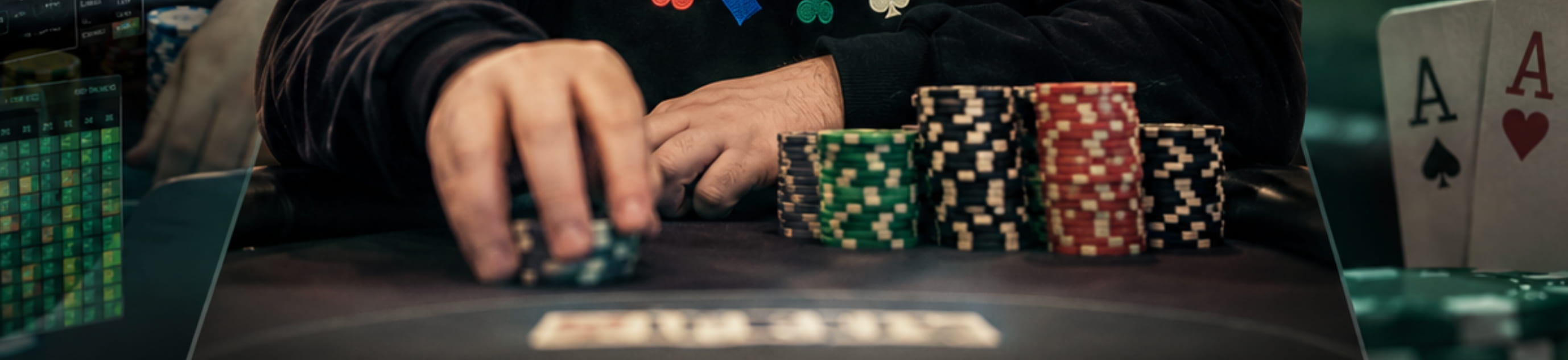
The silent killer of poker cash game win rates is rarely a technical leak; it is entitlement.
Entitlement is the subconscious belief that the universe owes you a specific monetary outcome because of your preparation or effort. It manifests in familiar thoughts:
- "I studied for 10 hours this week, so I should have a winning cash session."
- "I played this postflop line perfectly, so the river card shouldn't have cracked me."
- "I am technically superior to this recreational player, so I deserve his stack."
In almost every other area of life - school, fitness, traditional employment - this logic holds true. If you put in more hours, you earn a higher wage or achieve better results. You are conditioned from childhood to believe that Input = Output.
In 6-max cash games, that link is completely severed.
You can do everything right - eat clean, run solver simulations, execute flawless GTO preflop ranges, and play your absolute A-game - and still lose 10 buy-ins in a single afternoon to a recreational player who doesn't know basic pot odds.
When you carry entitlement into a cash game, the gap between what you think you "deserve" and what variance hands you triggers the most destructive form of tilt: Righteous Anger.
The "Employee" vs. The "Speculator" Mindset
To eliminate bad-beat tilt, you must audit how you view your time at the poker tables. Most struggling players approach cash games with an Employee Mindset.
An employee trades time for guaranteed compensation. They expect a predictable wage for a fair day’s work. When an employee works hard and isn't paid, they have a legitimate right to be angry because a contract was violated.
As a professional cash game player, you are not an employee. You are a Speculator.
You are a risk manager operating in a chaotic, probabilistic market. You do not get paid for your hourly effort; you get paid for your long-term mathematical edge - and that edge only realizes over massive hand samples.
Employee Mindset vs. Speculator Mindset
The Employee Mindset:
- Views downswings as a cosmic injustice or an unfair violation of an unwritten contract.
- Views bad beats as personal attacks by the site or opponents.
- Views losing sessions as wasted hours of uncompensated labor.
The Speculator Mindset:
- Views downswings as standard business overhead costs.
- Views bad beats as necessary short-term volatility to keep recreational players in the game.
- Views losing sessions as the cost of doing business in a high-EV market.
Just as a restaurant owner factors spoiled inventory and lease costs into their business model, a cash game player must treat variance as standard operating overhead.
If a restaurant owner screamed at the sky every time an ingredient spoiled, they would be deemed unfit to run a business. Yet cash game players scream every time an opponent hits a two-outer on the river, acting as if the laws of probability personally targeted them.
📥 Elevate Your 6-Max Cash Game Strategy
Enjoying this mental game breakdown? Join 1,000+ cash game players receiving weekly postflop solver analyses, exploitative heuristics, and mental performance protocols directly in their inbox.
Eradicating the "Should" Virus
Entitlement thrives on a single word: Should.
- "He shouldn't have called my turn check-raise with bottom pair."
- "That card shouldn't have completed his flush."
Whenever you use the word "should" at the tables, you are arguing with reality. You are fighting a war against the present moment because it doesn't match the expectation in your head.
This drains massive cognitive bandwidth. While you are mourning the stack you "should" have won, you miss critical timing tells, sizing deviations, and strategic adjustments in the very next hand.
The poker market does not care about your expectations. The deck has no memory, no morality, and no debt to you. Expecting a random dealing mechanism to be "fair" during a short session is mathematically nonsensical.
Aggressive Gratitude: Why Variance Keeps Cash Games Profitable
The ultimate antidote to entitlement is Aggressive Gratitude - a strategic reframing of how cash games generate income.
Stop and analyze the ecosystem: You are competing for freedom and financial gain by playing a strategic card game in a climate-controlled room. You are exercising your intellect without a boss, a schedule, or an earnings ceiling.
The price of this freedom is Variance.
Uncertainty is the exact "rent" you pay to sit at the table. If poker had no luck component, weak players would lose their bankrolls instantly, the economy would collapse, and the games would die.
The recreational player must win sometimes so that skilled players can win over the long run.
When a bad player cracks your Pocket Aces, do not get angry. Internally, reframe the hand: "Thank you for making a mathematically negative-EV call. Here is your temporary rebate. I will collect it back with interest over the next 10,000 hands."
The Actionable Shift: Re-Scripting Bad Beat Responses
The next time you feel a surge of anger after losing a massive pot, catch the entitlement immediately:
- Acknowledge the Root: Say to yourself: "I am angry right now because I believed I was owed this pot."
- Correct the Script: Reframe the reality: "I am owed nothing in a single hand. I made a mathematically correct decision. The result is just short-term noise."
- Execute the Next Decision: Pivot your focus back to observing your opponents' range leaks.
When you stop expecting the market to hand you win rates on demand, you can finally focus on taking them through superior execution. Kill the entitlement, pay the overhead, and play the next hand.
Ready to Turn Mindset into EV at the Tables?
Overcoming entitlement is step one. Pairing an elite mental framework with a dominant, solver-backed technical strategy is how you build a long-term win rate.
If you are ready to stop guessing postflop, master simplified GTO heuristics, and crush real-world opponents, dive into the Cash Game Hero Blueprint 2.0.
- 40+ Hours of Step-by-Step Video Modules
- Custom Solver Ranges & Exploit HUD 2.0 Setup
-
Comprehensive Mental Game Protocols & Live Hand Analysis
About the Author
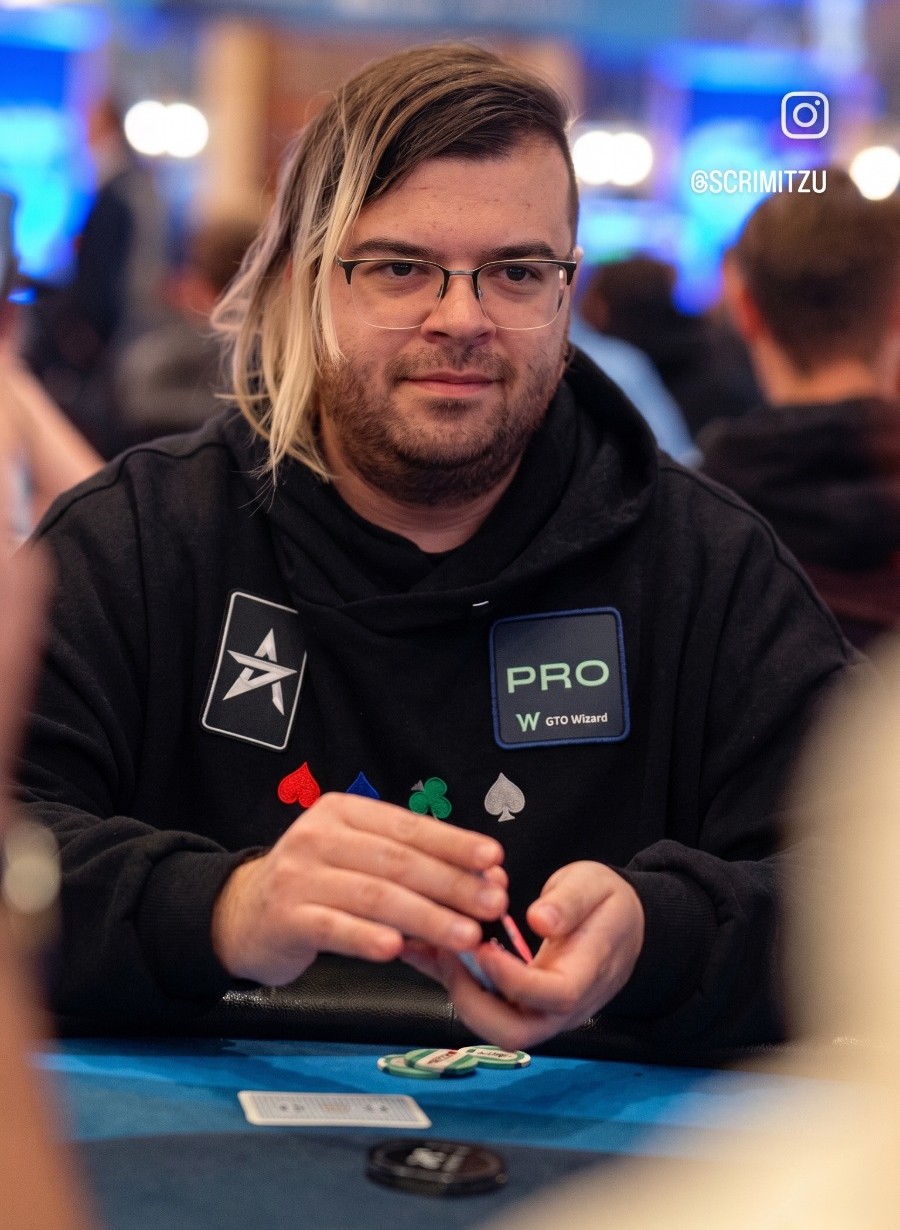
Scrimitzu is a professional poker player and coach with 17 years of experience and more than 10 million online hands played. He has coached over 500 players worldwide and is an official GTO Wizard coach and ACR Poker Team Online member.